"Listen to another parable. There was a landowner who planted a vineyard, put a fence around it, dug a wine press in it, and built a watchtower. Then he leased it to tenants and went to another country. When the harvest time had come, he sent his slaves to the tenants to collect his produce. But the tenants seized his slaves and beat one, killed another, and stoned another. Again he sent other slaves, more than the first; and they treated them in the same way. Finally he sent his son to them, saying, 'They will respect my son.' "
"But when the tenants saw the son, they said to themselves, 'This is the heir; come, let us kill him and get his inheritance.'"
"So they seized him, threw him out of the vineyard, and killed him. Now when the owner of the vineyard comes, what will he do to those tenants?"
They said to him, "He will put those wretches to a miserable death, and lease the vineyard to other tenants who will give him the produce at the harvest time."
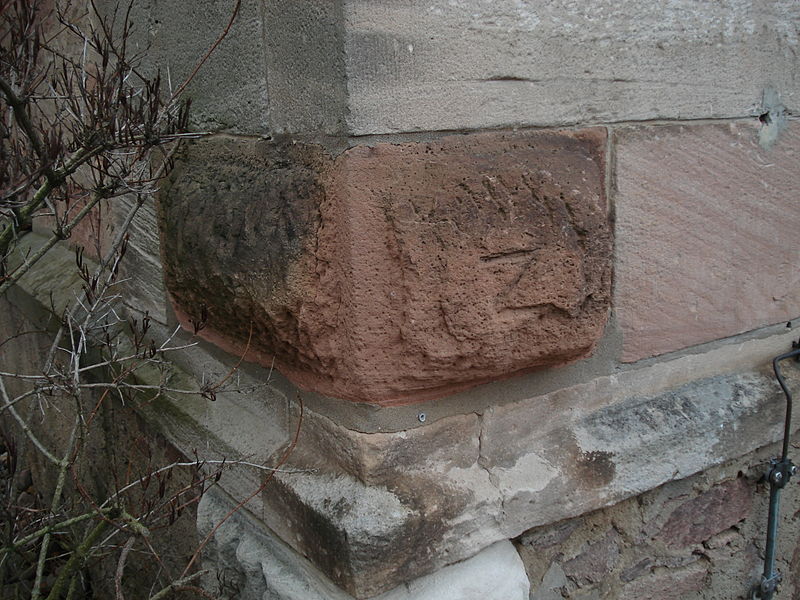
Jesus said to them, "Have you never read in the scriptures: 'The stone that the builders rejected has become the cornerstone; this was the Lord's doing, and it is amazing in our eyes'? Therefore I tell you, the kingdom of God will be taken away from you and given to a people that produces the fruits of the kingdom. The one who falls on this stone will be broken to pieces; and it will crush anyone on whom it falls."
When the chief priests and the Pharisees heard his parables, they realized that he was speaking about them. They wanted to arrest him, but they feared the crowds, because they regarded him as a prophet. – Matthew 21:33-46 (NRSV)
Who are you talking about, man?
Are you talking about me?
Are you looking at me?
Those are "fighting words."
So, the prevailing sentiment among the chieftains of the religious establishment was to arrest Jesus.
Think about it. What had he done to offend them? He had healed the sick … sometimes on the Sabbath. He had acted with compassion. He had taught the law of radical love. He had called for repentance as a response to the coming of the Kingdom of God.
These were not contradictions of Judaism.
It wasn't that he was going out of his way to taunt them. They had been after him. They could not tolerate the criticism. They had no patience for his radical reminders of the roots of their religion. Everything he said and was made mockery of their lust for control and religious order.
Then Jesus tells them that all of their pretense is completely at odds with God's kingdom and they are infuriated.
They believed that they held the keys to that kingdom, defined it, regulated it, and kept it pure.
But Jesus said that they were not only corrupting the true temple, they were rejecting its cornerstone. No wonder their building was about to topple on top of them.
They are harsh words, but they were not catching the nuances and subtitles.
"Yes. I'm talking about you."
"Now the ball is in your court."
Do not ever think that Jesus is the figure head or protector of religious business as usual, the golden boy of empire, or the mascot of tradition. He is not. He disrupts just about everything that is not solid. If it is not built upon the cornerstone, it falls.
Jesus and Jesus people will always stick out like sore thumbs.
We have chosen to build our lives on the Cornerstone and follow the radical messiah.
What is different today for a follower of Jesus?
What is different from then?
What is different since multiple tragedies and injustices in our world?
Nothing of our mission or calling has changed in the last 24 hours or two millennia.
The marching orders we awoke with yesterday morning are still in place. The call to love God and our neighbor is still in effect.
The challenge to be odd balls among people choosing sides based upon their own definitions or predilections is in place.
The counter-cultural mandate to follow Jesus holds. The different drum still beats. The beatific ideal has not diminished.
We have received no countermanded revisions to our stance of radical trust. We have received no direction to live in fear or reactive hostility.
Nor have we been assigned the task of maligning those who disagree with us.
We still believe in acting in wisdom, grace, compassion, love, and righteousness where we have influence.
We still believe in the dignity of every human being as a person created in the image of God and passionately loved by God.
We still believe in prayer over our own actions and those things beyond our control. We are still called to live with risk and to be willing to lay down our lives, take up our crosses, and follow Jesus.
Safety is not the first order of our lives. That order is to follow Jesus. We are still God's people first and whatever else we are, after that.
Folks who feel their power threatened are going to hear our words and observe our lives and take offense.
Nothing has changed.
————————————————
Now, on a slightly different note for this Advent season:
"Oh Divine Master, grant that I may not so much seek … to be loved as to love."
It seems easy, God,
Until I try.
Maybe I am not aware of how much I seek to be loved.
Maybe I am not aware of how insecure I can be and vulnerable …
And needy:
To be regarded, respected, and renowned …
To be chosen and cherished …
To be welcomed and warmed …
To be a friend …
But, Aha! Lord …
There is my choice: to BE a friend is to be and to act and to serve
LIKE A FRIEND.
If I seek it, I will be it.
If I seek to love, I will love.
Grant that I will reject reciprocity in this matter and think nothing of …
Quid Pro Quo …
Teach me to love by loving through me.
Teach me to love by knowing again and again and again, how deep,
How wide,
How long,
How long-suffering,
How patient is Your love for me and that …
It is all I need.
So, filled with love, I can give love.
In the Name of the Lord of Love,
The Cornerstone, rejected by the builders
Strong and consistent Jesus,
The Christ of Glory!
Amen.

 Pastor Tom's Community
Leave a comment