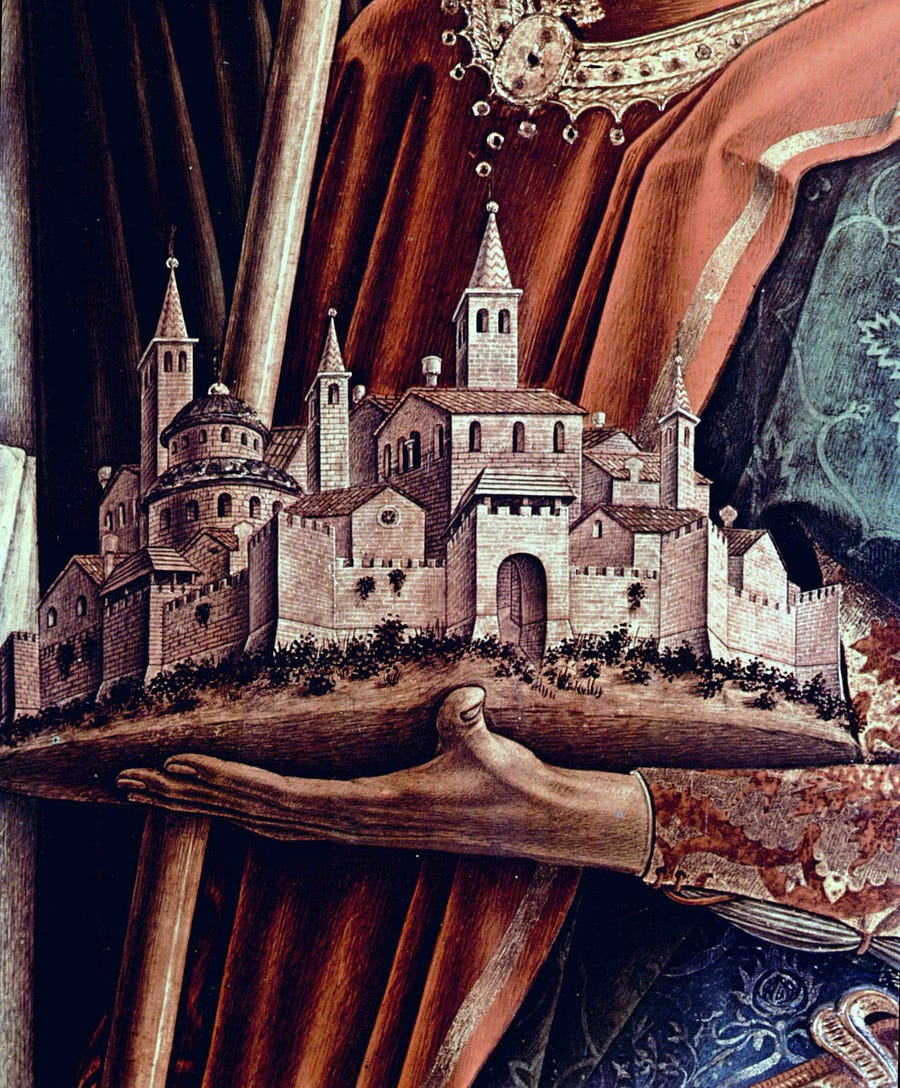
“The nations will walk by its light, and the kings of the earth will bring their glory into it.”
A God that We Might Know
There is a God who desires to be known and there are people who desire, whether they know it or not, to know God.
During the night Paul had a vision: there stood a man of Macedonia pleading with him and saying, “Come over to Macedonia and help us.” When he had seen the vision, we immediately tried to cross over to Macedonia, being convinced that God had called us to proclaim the good news to them. We therefore set sail from Troas and took a straight course to Samothrace, the following day to Neapolis, and from there to Philippi, which is a leading city of the district of Macedonia and a Roman colony. We remained in this city for some days.
On the Sabbath day we went outside the gate by the river, where we supposed there was a place of prayer, and we sat down and spoke to the women who had gathered there. A certain woman named Lydia, a worshiper of God, was listening to us; she was from the city of Thyatira and a dealer in purple cloth. The Lord opened her heart to listen eagerly to what was said by Paul. When she and her household were baptized, she urged us, saying, “If you have judged me to be faithful to the Lord, come and stay at my home.” And she prevailed upon us.
Psalm 67 — A Prayer that All Might Know
May God be gracious to us and bless us and make his face to shine upon us,
Selah
that your way may be known upon earth,
your saving power among all nations.
Let the peoples praise you, O God; let all the peoples praise you.
Let the nations be glad and sing for joy,
for you judge the peoples with equity and guide the nations upon earth.
Selah
Let the peoples praise you, O God; let all the peoples praise you.
The earth has yielded its increase; God, our God, has blessed us.
May God continue to bless us; let all the ends of the earth revere him.
Revelation 21:10, 22–22:5 — In the City of God, Where All Know God
And in the spirit he carried me away to a great, high mountain and showed me the holy city Jerusalem coming down out of heaven from God. I saw no temple in the city, for its temple is the Lord God the Almighty and the Lamb. And the city has no need of sun or moon to shine on it, for the glory of God is its light, and its lamp is the Lamb. The nations will walk by its light, and the kings of the earth will bring their glory into it.
Its gates will never be shut by day — and there will be no night there.
People will bring into it the glory and the honor of the nations.
But nothing unclean will enter it, nor anyone who practices abomination or falsehood, but only those who are written in the Lamb’s book of life.
Then the angel showed me the river of the water of life, bright as crystal, flowing from the throne of God and of the Lamb through the middle of the street of the city. On either side of the river is the tree of life with its twelve kinds of fruit, producing its fruit each month, and the leaves of the tree are for the healing of the nations. Nothing accursed will be found there any more.
But the throne of God and of the Lamb will be in it, and his servants will worship him; they will see his face, and his name will be on their foreheads. And there will be no more night; they need no light of lamp or sun, for the Lord God will be their light, and they will reign forever and ever.
John 14:23–29 — Knowing God in a Day by Day, Moment by Moment, Loving Relationship
Jesus answered him, “Those who love me will keep my word, and my Father will love them, and we will come to them and make our home with them. Whoever does not love me does not keep my words, and the word that you hear is not mine but is from the Father who sent me.
“I have said these things to you while I am still with you. But the Advocate, the Holy Spirit, whom the Father will send in my name, will teach you everything and remind you of all that I have said to you.
Peace I leave with you; my peace I give to you. I do not give to you as the world gives. Do not let your hearts be troubled, and do not let them be afraid.
“You heard me say to you, ‘I am going away, and I am coming to you.’ If you loved me, you would rejoice that I am going to the Father, because the Father is greater than I.
And now I have told you this before it occurs, so that when it does occur you may believe.
John 5:1–9 — Meeting God and Being Made Well on the Sabbath
After this there was a festival of the Jews, and Jesus went up to Jerusalem. Now in Jerusalem by the Sheep Gate there is a pool, called in Hebrew Beth-zatha, which has five porticoes. In these lay many ill, blind, lame, and paralyzed people. One man was there who had been ill for thirty-eight years. When Jesus saw him lying there and knew that he had been there a long time, he said to him, “Do you want to be made well?”
The ill man answered him, “Sir, I have no one to put me into the pool when the water is stirred up, and while I am making my way someone else steps down ahead of me.”
Jesus said to him, “Stand up, take your mat and walk.”
At once the man was made well, and he took up his mat and began to walk.
Now that day was a Sabbath.

From My Notetaker
Knowing God and the Sabbath
The speaker emphasizes the importance of knowing God, which transcends intellectual understanding, and highlights the Sabbath as a time for reflection and connection with God. The Sabbath is described as a meeting place between God and man, a time to step away from daily life and focus on the eternal. The speaker references Acts 16, where Paul has a vision of a man from Macedonia, illustrating the theme of divine encounters and the importance of being open to them. The speaker discusses how the Sabbath is a recurring theme in the passages and how it serves as a time to step aside from the busy work of life to focus on something eternal, allowing for a deeper relational and loving knowing of God.
Prayer and Psalm 67
The speaker discusses Psalm 67 as a prayer for God’s grace and blessings, emphasizing the desire for God’s ways to be known on Earth. The psalm is a call for all nations to praise God and for His justice and truth to prevail. The speaker highlights the importance of praying for others to know God and for His blessings to be evident in the world, reflecting a communal desire for divine connection and understanding. The speaker emphasizes that the prayer is for all people to know God and be glad, and for God’s equity, justice, and truth to prevail.
Revelation and Eternal Knowing
The speaker reflects on Revelation 21 and 22, describing a vision of the Holy City, Jerusalem, as a place where God’s presence is eternal and accessible. The imagery of the city with no need for sun or moon, and the River of Life, symbolizes eternal access to God. The speaker emphasizes that knowing God is an eternal pursuit, and the vision serves as a reminder of the ultimate fulfillment of longing for divine connection. The speaker describes how the vision of the Holy City represents the eternal purposes of heaven on Earth, where God’s presence is the light and the nations walk by it.
Jesus’ Teachings on Love and the Holy Spirit
The speaker discusses Jesus’ teachings in John 14, emphasizing the importance of love and obedience in knowing God. Jesus promises the Holy Spirit as an advocate to teach and remind believers of His teachings. The speaker highlights the peace that comes from knowing God, contrasting it with the troubled and fearful heart of those who do not know Him. This peace is described as a deeper understanding and connection with God, beyond intellectual belief. The speaker explains that Jesus describes the relationship with God as one of love, where the Holy Spirit enables believers to understand and remember His teachings, bringing peace that surpasses understanding.
Healing and Faith at the Pool of Bethesda
The speaker recounts the story from John 5 of a man healed by Jesus at the Pool of Bethesda. The man had been ill for 38 years and believed in a legend that an angel would stir the waters for healing. Jesus asks if he wants to be made well, emphasizing the importance of faith and desire for healing. The story illustrates the theme of divine intervention and the transformative power of faith in knowing God. The speaker highlights that the man’s healing was not about winning a race to the water but about hearing Jesus’ voice and standing up in faith, illustrating the deeper knowing and trust in God’s grace.
SUMMARY from Notetaker
The meeting, led by Tom Sims, focused on the theme of knowing God, exploring this through various biblical passages. The discussion began with reflections on the presence of God and the desire for a deeper understanding beyond intellectual knowledge, as illustrated by Carl Jung’s statement of knowing God. The meeting then delved into Acts 16, highlighting Paul’s vision and encounter with Lydia, emphasizing the Sabbath as a time for spiritual connection. Psalm 67 was discussed as a prayer for universal knowledge of God, followed by a vision from Revelation 21 of eternal access to God. The conversation also included Jesus’ teachings in John 14 about a loving relationship with God and the role of the Holy Spirit. Finally, the story of a healing at the pool of Bethesda in John 5 was used to illustrate faith and the desire for wellness. The meeting concluded with an encouragement to embrace the Sabbath as a moment of connection with God and to act on the faith that leads to knowing God.
More Reflections — How I Reflected on These Texts in the Past
To Begin Again
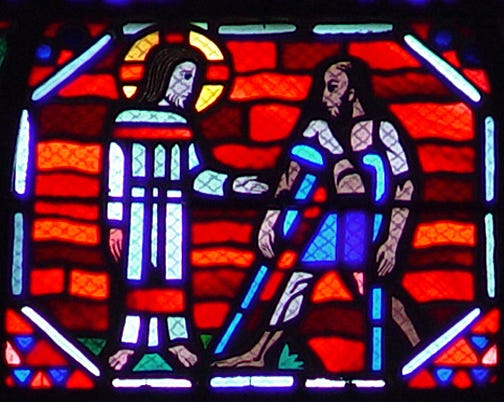
John 5:8 — “Jesus saith unto him, Rise, take up thy bed, and walk.”
A lame man only knew how to do one thing well: Be lame. He actually knew two things. He knew how to beg for alms. His life was about to change. Through the power of God and the love of Jesus, he was about to be able to do three things:
Rise.
Take up his bed.
Walk.
Louise Fletcher Tarkington was the wife of playwright Boot Tarkington. They married in 1902 and had a daughter, Laurel in 1906. Boot was an alcoholic and Louise divorced him in 1911. Laurel developed schizophrenia and died of pneumonia at the age of 16. Louise died in 1923 a year after Laurel’s death.
You might say that Louise was somewhat crippled by her circumstances. Her life was sad and hard. We do not really know very much about her life except for what was in her obituary and the fact that she left us a magnificent poem.
The first verse reads:
I wish that there were some wonderful place
Called the Land of Beginning Again
Where all our mistakes and all our heartaches
And all of our selfish grief
Could be dropped like a shabby old coat by the door
And never be put on again.
The next to the last verse says:
For what had been hardest we’d know had been best
And what had seemed loss would be gain
For there isn’t a sting that will not take a wing
When we’ve faced it and laughed it away,
And I think that the laughter is most what we’re after
In the Land of Beginning Again.
Mrs. Tarkington, out of her own encounter with the God of grace, had learned to rise, take up her bed, and walk.
Jesus asked the right question, “Do you want to be healed?” The man heard it through his own filters and thought his answer was contingent on his preconceptions of getting in the water. That was not the case. Right question, wrong answer, but Jesus did not give up and the man was healed.
“ Now there is in Jerusalem by the Sheep Gate a pool, in Aramaic called Bethesda, which has five roofed colonnades. In these lay a multitude of invalids — blind, lame, and paralyzed. One man was there who had been an invalid for thirty-eight years. When Jesus saw him lying there and knew that he had already been there a long time, he said to him, “Do you want to be healed?” The sick man answered him, “Sir, I have no one to put me into the pool when the water is stirred up, and while I am going another steps down before me.” Jesus said to him, “Get up, take up your bed, and walk.” And at once the man was healed, and he took up his bed and walked.”
“Now that day was the Sabbath.”
(John 5:2–9 ESV)
The last statement brings up a whole different subject and yet, the main subject of the story — how we get locked in by our limited thinking and the boxes in which we try to fit God.
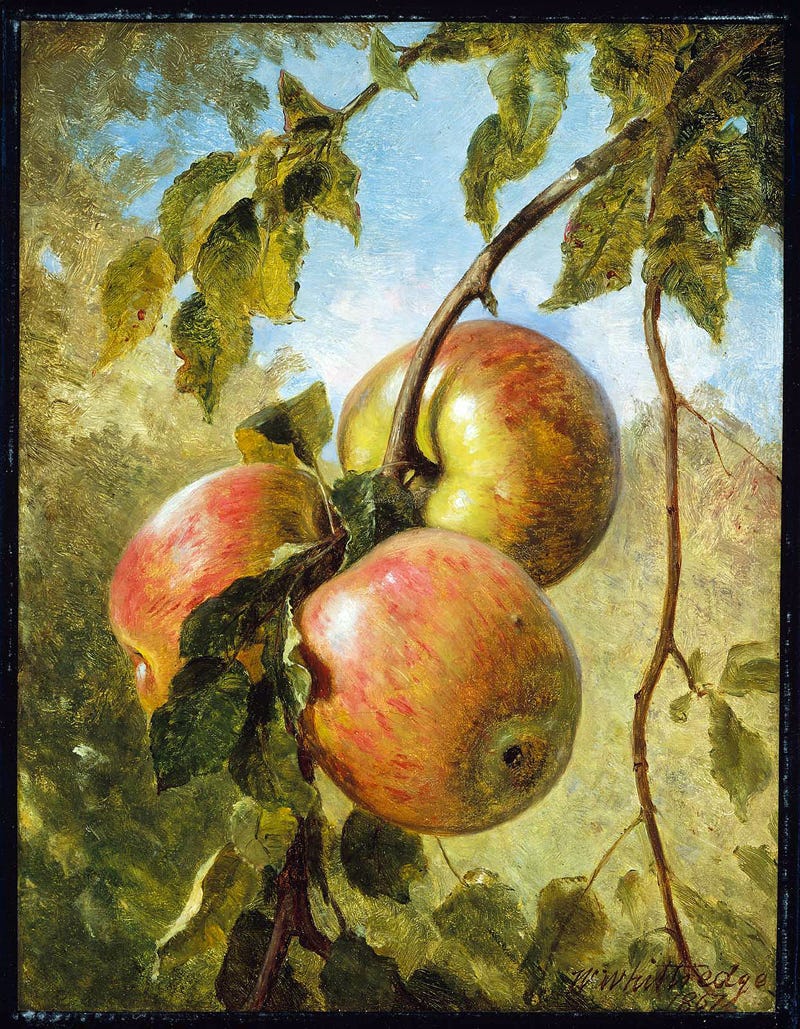
… on either side of the river, was there the tree of life, which bare twelve manner of fruits, and yielded her fruit every month: and the leaves of the tree were for the healing of the nations. — Revelation 22:2
In June, there is a National Doughnut Day. Doughnut shops around the country are giving them away. The Salvation Army started the celebration in 1938. It seems that during World War I, some of their members went to the battlegrounds to serve baked goods to soldiers. The day honors those volunteers.
Every special day has some sort of history, meaning, significance, or ulterior motive behind it.
Did you know that May 3 was Lumpy Rug Day?
That’s OK, because the next is National Candied Orange Peel Day and next Sunday is Clean Up Your Room Day. There are about 20 special days in May and in every month of the year. They are proliferating.
They are as predictable as the flow of a mighty river. Solomon was right when he said that for everything there is a season and a time for every purpose under heaven.
It is OK too! There are “God-Made” Holy Days and “man-made” special days and God made every day for celebration of life and commemoration of His presence.
John saw a vision of a day when our experience of God’s blessings would be consistent, day after day, month after month. May, June, and January are all the same in God’s city. The river of life supplies refreshment to the tree of life, and life grows from her.
What John saw in Heaven is a future promise and a present spiritual reality. That which flows from God is ever new and always refreshing. The river that nourishes the tree of life nourishes us and produces healing fruit in our lives.
Remember, every time you see a flower, that it is seasonal and dependent upon the right weather, food, and water.
Remember every time you see spiritual fruit that it is also dependent on the right spiritual conditions, but especially, an eternal and consistent source who does not depend on special days, months, or seasons to bring life.
Remember when you see a doughnut, that it is probably not as good for you as the fruit that grows by living water … but you have permission to eat one … maybe … today .
“In the midst of the street of it, and on either side of the river, was there the tree of life, which bare twelve manner of fruits, and yielded her fruit every month: and the leaves of the tree were for the healing of the nations.” — Revelation 22:2
Lately there has been a growing interest in the therapeutic value of fruits. The chemical properties of certain fruits seem to promote general health and even healing is some instances. Most of these have grown naturally in the wild for millennia. God planted them, watered them, and nourished them.
Someday, believers will taste different fruits and experience a different sort of healing. Along the river of God, the tree of life will produce a complete crop of fruit that will heal all the ills of mankind. This is God’s doing, and He does it well.
Just as man never planted the trees in the rainforest that produce antioxidants and healthy reactions in the human body, no man or woman plants or cultivates the tree of life. God provides it and it will be prominent in the Holy City, New Jerusalem.
The scripture says that there will be no more death, sorrow, or crying there. There will be no pain. All the former things will be passed. Only what is new will remain.
So this fruit does so much more than bolster our immune systems or supply our bodies with nutrients. It makes us immune to the power of death and nourishes our eternal souls. This fruit refreshes and renews and is pleasant to the taste and to the eye.
Here at the close of history and the beginning of a new age, there is a great reversal. It was another tree, with the fruit of the knowledge of good and evil that was also pleasant to the eye and the taste. It sent mankind into a spiraling tailspin of destruction at the start of human history and closed off all access to the tree of life. Now, in the New Jerusalem, the tree of life is available to all and provides the real thing to all who hunger.
That is just like God.

 Pastor Tom's Community
Leave a comment