When Leaving Becomes Faithfulness — The Witness of Absalom Jones

There are moments in the life of faith when staying feels virtuous — patient, enduring, long-suffering.
And there are moments when staying becomes surrender.
On this feast day of Absalom Jones (1746–1818), we remember a moment when leaving was not rebellion, but righteousness.
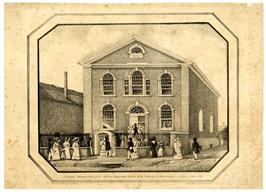
In 1792, at St. George’s Methodist Episcopal Church in Philadelphia, Black worshipers who had helped build the congregation were forcibly segregated during prayer. Ushers attempted to move them to a gallery reserved for them — mid-kneeling, mid-worship.
Absalom Jones rose.
And he walked out.
He did not storm. He did not curse. He did not denounce Christ.
He simply refused to kneel in humiliation.
That walkout was not abandonment of the Church.
It was protest against a distortion of it.
Scripture Knows This Pattern
Jones’ act did not emerge from anger alone. It stands in a long biblical tradition of conscience-driven separation.
Exodus: Leaving to Worship
In Exodus, Moses confronts Pharaoh with a liturgical demand:
“Let my people go, that they may worship me.” (Exodus 8:1)
Israel’s departure was not merely political escape. It was spiritual reclamation. Slavery had corrupted worship. Liberation restored it.
Sometimes you must leave in order to worship truthfully.
Abraham: Stepping Away Toward Promise
“Go from your country…” (Genesis 12:1)
Faith often requires leaving familiar structures that can no longer carry the promise forward.
Jones did not leave Christianity.
He left humiliation.
The Prophets: Refusing False Worship
Amos declared:
“Let justice roll down like waters…” (Amos 5:24)
God does not bless liturgy that coexists comfortably with oppression. The prophets often stood apart in order to call the community back to its covenant.
Sacred protest is not schism.
It is purification.
Jesus: Holy Withdrawal
Jesus cleansed the temple.
He walked away from crowds seeking spectacle.
He left Nazareth when rejection hardened.
There are moments when remaining validates distortion.
Leaving can be obedience.
What Made Jones’ Departure Sacred?
Sacred protest differs from impulsive exit.
Jones did not walk out to isolate himself. He walked out to build something faithful.
In 1787, he had already co-founded the Free African Society with Richard Allen — a mutual aid community of dignity and support. After the walkout, he helped establish the African Episcopal Church of St. Thomas in 1794, the first Black Episcopal congregation in the United States. In 1802, he became the first African American ordained a priest in the Episcopal Church.
He did not abandon mission.
He deepened it.
He insisted that his congregation be received:
- As an organized body.
- With control over its own local affairs.
- With the possibility of ordination for its chosen leader.
This was not fragmentation.
It was ecclesial self-respect.
When Is Leaving Faithful?
Leaving becomes faithfulness when:
- Staying would require surrendering dignity.
- Staying would normalize injustice.
- Staying would silence the Spirit’s conviction.
- Staying would teach the next generation that humiliation is holy.
Leaving becomes sacred when it is anchored not in ego, but in conscience.
Jones’ walkout did not destroy the Church.
It revealed what the Church must become.
A Word for Today
In every generation, believers face this tension:
Is endurance still virtue — or has it become complicity?
Sacred protest is never casual. It costs community. It risks misunderstanding. It invites accusation.
But sometimes, the most faithful act is not louder preaching or sharper argument.
Sometimes it is standing up quietly, mid-prayer, and walking toward dignity.
On this February 13 — the day of his death and his commemoration in the Episcopal Church — may we have the courage to discern:
When is staying holy?
When is leaving required?
And if we must leave, what are we building in its place?

 Pastor Tom's Community
Leave a comment