There are seasons when I speak of compassion mainly in the context of my role as a leader in the faith community, as a pastor in my particular context.
That is natural enough. One would think that among the people of faith, the audience would be receptive to the concept of compassion.
After all, in my faith, our role model—our leader—is often depicted as having compassion on the crowds as well as on individuals, and acting with compassion to meet needs.
But as I have reflected on Matthew 9:18–38, I have been poked in the side by a larger realization:
We need this everywhere.
Not just in pulpits.
Not just in churches.
Not just in moments of prayer and worship.
We need compassion in public life, in neighborhoods, in institutions, in families, in conversations, in policies, in advocacy, in social media, in the way we vote, in the way we give, and in the way we think about people who are not exactly like us.
The church must become, once again, a clarion call for a more compassionate world.
Jesus Saw the Crowds
When Matthew tells us that Jesus saw the crowds, he does not merely say that Jesus noticed them.
He tells us what Jesus saw:
“He had compassion on them, because they fainted, and were scattered abroad, as sheep having no shepherd.” — Matthew 9:36
This is diagnosis as well as description.
Jesus saw:
- The harassed
- The helpless
- The scattered
And in seeing them, He did not withdraw.
He did not harden Himself.
He did not reduce them to categories.
He had compassion.
Compassion moved Jesus toward people, not away from them.
That compassion expressed itself in action:
- Healing the sick
- Restoring the outcast
- Opening blind eyes
- Giving voice to the voiceless
- Calling laborers into the harvest
And it was never compartmentalized.
The compassion of Jesus was never just spiritual, never just physical, never just social—it was the whole person, the whole need, the whole response.
What Compassion Means
Compassion is not thin sentiment.
At its root, it means:
To suffer with.
It is the willingness to:
- Enter into another’s experience
- Feel what they feel
- Respond in meaningful ways
Empathy and compassion are inseparable.
When empathy goes, something of Jesus goes out of our conversation and out of our motivation.
That is why it is troubling to hear even voices within faith communities express suspicion toward empathy.
We might expect that from hardened pragmatism.
We should not expect it from the people of God.
The Church as Lighthouse and Outpost
I have often said that the church is to be a lighthouse.
I still believe that.
But perhaps we need to expand that image:
The church is also an outpost—planted in the world to promote compassion in places that grow cold.
What That Means in Practice
We advocate:
- Through preaching
- Through teaching
- Through fundraising
- Through public witness
- Through acts of mercy
- Through how we tell the stories of human need
This is not manipulation.
This is ministry.
We are calling forth that God-given capacity in people to care.
It is our role to bring distant suffering close enough to be seen—and close enough to be felt.
A Larger Vision of Humanity
It is easy to care about what is near.
Family.
Friends.
Neighbors.
But the church is called to a larger vision.
All humanity is in the same boat, floating on a sea of turmoil and distress.
We have seen this.
A virus crosses oceans.
A crisis spreads beyond borders.
Pain refuses containment.
What affects one… eventually affects all.
“Bear ye one another’s burdens, and so fulfil the law of Christ.” — Galatians 6:2
The Biblical Mandate
Scripture is clear:
- “Weep with them that weep.”
- “Visit the afflicted.”
- “Do justly, love mercy.”
And above all:
Jesus saw—and Jesus had compassion.
To preach Christ without compassion is to misrepresent Christ.
Compassion is not optional.
It is not a niche ministry.
It is not reserved for specialists.
It is the calling of the whole church.
Run It Through the Filter
So here is the practical challenge:
Run everything through the filter of compassion.
- Your theology
- Your politics
- Your conversations
- Your leadership
- Your social media
- Your decisions
And see what remains.
Compassion does not replace truth—it shapes how truth is carried.
A Clarion Call
The church must be more than a refuge from the world’s pain.
It must be a clarion call into the world’s pain.
Not to romanticize suffering.
Not to abandon conviction.
But to reflect the heart of Christ clearly and courageously.
The crowds are still there.
- Still harassed
- Still helpless
- Still scattered
And still in need of shepherds.
Jesus still looks on them with compassion.
May His church do no less.
Continue the Conversation
For a deeper, faith-centered reflection on compassion, pastoral leadership, and Matthew 9, continue the conversation at Bible Chat on Substack:
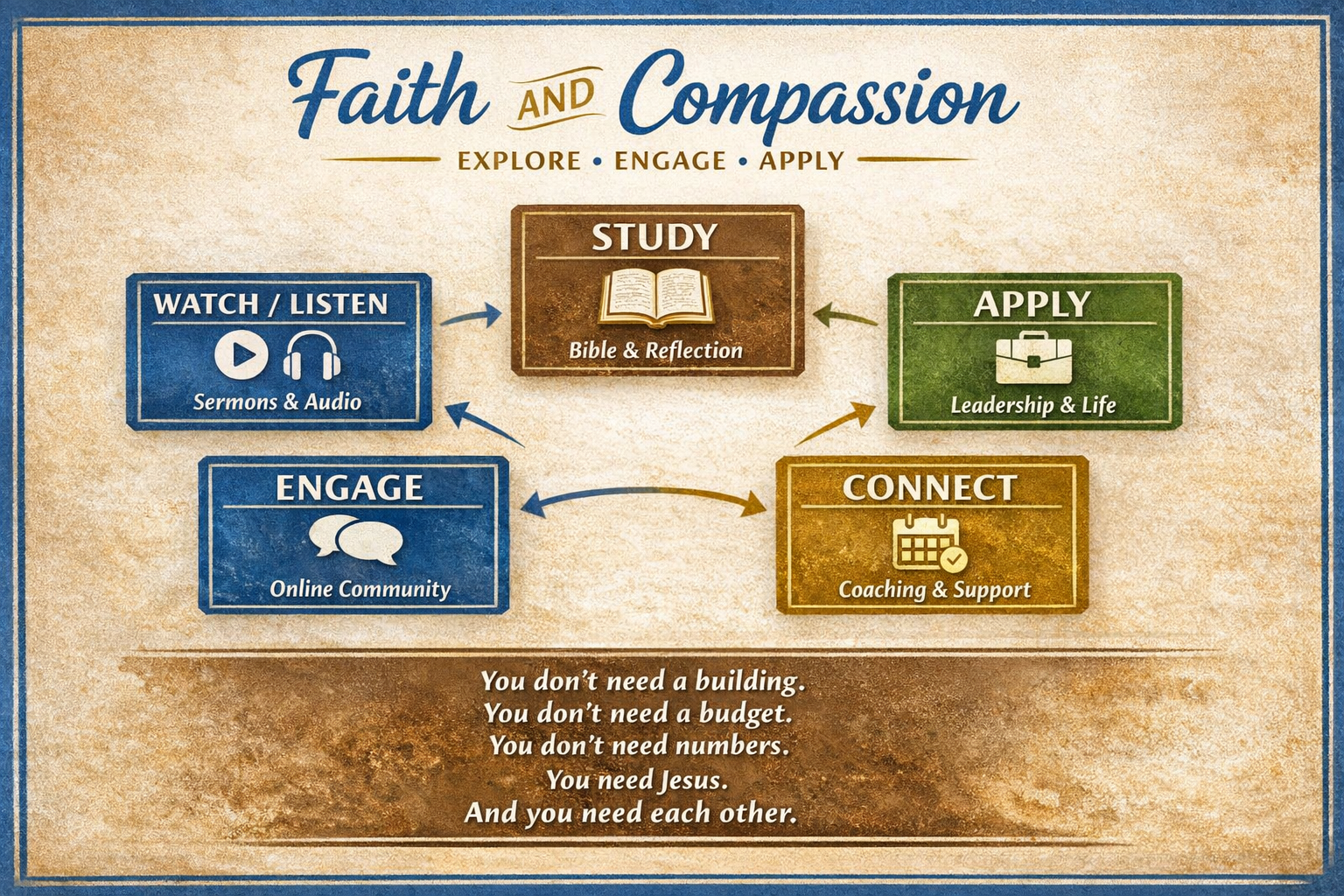
Faith and Compassion — Matthew 9:18–38
Explore • Engage • Apply
▶️ Start Here (Watch / Listen)
- 🎥 Full Sermon (YouTube)
https://youtu.be/Zl6sn8IOEzc - 🎥 Full Sermon (Facebook)
https://fb.watch/G90IhlxH0b/ - 🎧 Audio Reflection
https://buymeacoffee.com/tomsims/faith-compassion-an-audio-reflection-matthew-9
📖 Go Deeper (Study & Reflection)
- 📚 Bible Chat (Substack)
https://tomsims.substack.com/p/faith-and-compassion-matthew-91838 - 📝 Personal Reflection (Medium)
https://medium.com/@tomsims/the-filter-of-compassion-f60190f03152?sk=fda883e2cfb8214834baa069fbe16fc8 - ✝️ Church & Theology (pastortom.blog)
https://pastortom.blog/2026/03/29/the-church-as-a-clarion-call-for-a-more-compassionate-world/
👥 Apply (Leadership & Life)
- ⛪ Faith Leaders (Pastoral Excellence)
https://www.linkedin.com/pulse/viewing-crowds-through-eyes-jesus-tom-sims-vaucc - 🏢 Leaders in Any Field
https://www.linkedin.com/pulse/compassionate-leader-tom-sims-twujc
🤝 Engage (Community)
- 💬 Fellowship of Joy Facebook Group
https://www.facebook.com/groups/fellowshipofjoy
📅 Connect
- 🗓 Coaching / Conversation
https://calendly.com/coachtomsims/just-a-conversation-or-meeting
You don’t need a building.
You don’t need a budget.
You don’t need numbers.
You need Jesus.
And you need each other.
Be the church—right where you are.

 Pastor Tom's Community
Leave a comment