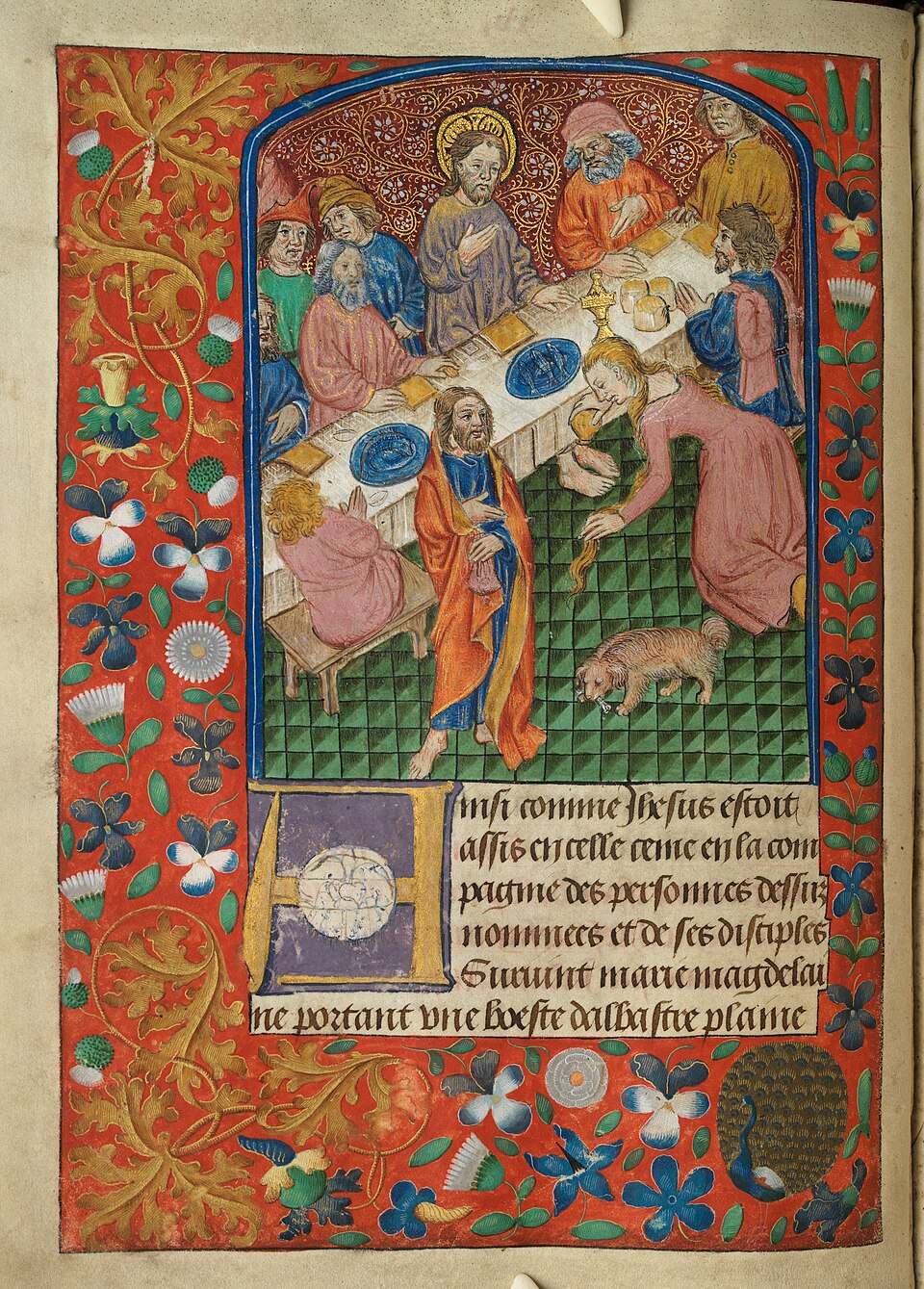
John 12:7
“Then said Jesus, Let her alone: against the day of my burying hath she kept this.”
The anointing of Jesus is told more than once.
You find it in Matthew 26, Mark 14, Luke 7, and John 12.
Matthew, Mark, and John place it in Bethany, during Holy Week, in the house of Simon the leper. John tells us the woman is Mary—the sister of Martha and Lazarus.
Luke tells a similar story, but the woman is unnamed, described as a sinner, and the setting is earlier, in Galilee.
Are these the same event?
Scholars can continue that conversation.
What matters here is something deeper.
Whoever she is—this woman is grateful.
And gratitude has a way of becoming love.
“What shall I render unto the LORD for all his benefits toward me?”
“I will take the cup of salvation, and call upon the name of the LORD.”
— Psalm 116:12–13
“Thanks be unto God for his unspeakable gift.”
— 2 Corinthians 9:15
Listen to the cry behind those words.
How can I give anything to God that would come close to expressing my gratitude?
What can I bring Him that He has not already given me?
The psalmist wrestles with that question.
Paul does too.
He cannot even fully describe the gift God has given—and yet he gives thanks.
And then we see Mary.
She does not calculate.
She does not analyze.
She pours.
This is the power of gratitude.
It does not originate in us.
It is awakened by God’s giving.
God gives first.
God gives freely.
God gives beyond what we can measure or describe.
And somewhere in that giving, something is ignited within us—a fire of grace that turns receivers into givers.
That is where commitment is born.
Not out of pressure.
Not out of obligation.
But out of response.
Even then, our commitments are not self-sustained promises. They are trusts.
We offer them knowing we cannot fulfill them perfectly.
But He can.
And He is faithful to continue His work in us.
So what shall we give Him?
We can bring Him hearts that are ready to receive.
We can offer our old lives in exchange for His new life.
We can take the cup of salvation and call upon His name.
We cannot out-give Him.
We cannot match His gift.
But we can receive it.
And in receiving, we become people who give.
And perhaps that is what Mary understood.
Better than words.
Better than arguments.
Better than explanations.
She anointed Him with what she had.
And we…
We anoint Him still.
Sometimes with our resources.
Sometimes with our lives.
And sometimes—
With our tears.
Art Note
Peniarth 482D is a manuscript written by one scribe, on parchment, probably in London, either in the late 15th century, or at the beginning of the 16th. As in the case of Peniarth MS 481D (The Battles of Alexander the Great), it is one of the most elaborately decorated medieval manuscripts in the Library, and a rare survival in its original binding. Its importance also lies in its connection to the Royal households of Henry VII and Henry VIII.

 Pastor Tom's Community
Leave a comment