Religious Scrupulosity, OCD, and the Fear of the “Unpardonable Sin”
Recently, I recorded a sermon and companion reflections around Matthew 12 and Jesus’ strong words about loyalty, neutrality, resistance, and decision.
In that passage, Jesus says startling things:
- “Whoever is not with Me is against Me.”
- and,
- “Blasphemy against the Holy Spirit will not be forgiven.”
That second statement has troubled sensitive believers for generations.
And because I addressed it in the sermon and Bible Chat study, I think it is important here on pastortom.blog to pause and speak directly about something many churches still do not understand very well:
religious scrupulosity.
Specifically:
the intersection between obsessive-compulsive disorder (OCD), pathological guilt, intrusive religious fears, and the fear of having committed the so-called “unpardonable sin.”
Because I want to say this clearly and early:
The people Jesus was condemning in Matthew 12 were not tender-hearted believers terrified of offending God.
They were not anxious Christians trapped in cycles of guilt.
They were not people desperately seeking reassurance.
They were not wounded people longing for grace.
Jesus was confronting hardened religious leaders who were witnessing the liberating work of God and deliberately calling it evil.
That distinction matters enormously.
The Context Matters
Jesus spoke these words in context.
The Pharisees had watched Him:
- heal,
- restore,
- liberate,
- and bring hope to suffering people.
And instead of rejoicing, they accused Him of working by demonic power.
That is not confusion.
That is not weakness.
That is not intrusive anxiety.
That is persistent, willful resistance to obvious grace.
In the sermon and Substack companion piece, I noted that blasphemy against the Holy Spirit, in context, is not:
- accidentally saying the wrong words,
- having a frightening thought,
- doubting,
- questioning,
- or struggling emotionally.
It is the settled posture of persistently rejecting the work of God while knowingly attributing that work to evil.
And if you are deeply afraid you may have committed this sin, the likelihood that you actually have is extraordinarily small.
Why?
Because the very grief,
fear,
concern,
and longing for mercy
demonstrate a heart that is still responsive.
What Is Religious Scrupulosity?
Religious scrupulosity is generally understood as a subtype or manifestation of obsessive-compulsive disorder.
It is not simply “taking faith seriously.”
It is not merely deep conviction.
It is not healthy repentance.
It is something more painful and more consuming.
It involves:
- pathological guilt,
- obsessive fear of sin,
- intrusive unwanted thoughts,
- excessive concern over moral or spiritual failure,
- compulsive confession,
- compulsive prayer rituals,
- repeated checking and rechecking of one’s spiritual condition,
- and chronic fear of offending God.
People suffering from religious scrupulosity often feel trapped in relentless cycles of anxiety.
They may:
- repeatedly walk church aisles,
- constantly seek reassurance,
- repeatedly “recommit” themselves,
- obsess over motives,
- fear hidden rebellion,
- or panic over intrusive thoughts they never wanted in the first place.
Sometimes the cycle becomes so intense that people even begin feeling guilty for feeling guilty.
And all of this can become spiritually exhausting.
Why Theology Alone Often Does Not Solve It
One of the hardest realities for pastors and church leaders to understand is this:
People struggling with scrupulosity often already know the theology of grace.
They may understand salvation by grace through faith intellectually very well.
They may be able to quote:
“For by grace are ye saved through faith…”
They may fully affirm:
- forgiveness,
- mercy,
- justification,
- and the love of God.
And yet the anxiety loop continues.
Why?
Because this is not merely a theological misunderstanding.
It is often a medical and psychological condition expressing itself through religious language and fears.
The cycle is obsessive and compulsive.
The fear feels real.
The danger feels immediate.
The guilt feels overwhelming.
The nervous system itself becomes trapped in repeated loops of anxiety and reassurance-seeking.
That is why simply repeating:
“God loves you”
or
“You are forgiven”
may not completely resolve the struggle.
That reassurance may help temporarily.
But then the cycle returns.
What Churches and Pastors Need to Understand
This is one reason I wanted to write this article.
Not merely for sufferers.
But for pastors, churches, ministry leaders, and spiritual communities.
If you lead people spiritually, you almost certainly already know people suffering from this condition — even if neither you nor they have named it yet.
And I would encourage pastors and spiritual caregivers to consider several things carefully.
1. Avoid weaponizing guilt.
Fear and shame are powerful emotional tools.
But if guilt becomes the primary mechanism of spiritual motivation, vulnerable people may suffer profoundly.
Jesus Himself consistently directed His strongest criticism toward hardened religious rigidity — not toward wounded people seeking mercy.
2. Learn to distinguish conviction from compulsion.
Healthy conviction:
- leads toward grace,
- repentance,
- restoration,
- and peace.
Compulsion:
- traps people in cycles,
- produces paralysis,
- and never allows rest.
One draws people toward Christ.
The other imprisons them in fear.
3. Understand when referral may be necessary.
Pastors can provide:
- compassion,
- prayer,
- support,
- and spiritual guidance.
But sometimes professional therapy is needed as well.
And ideally, therapy from someone who understands and respects the person’s faith tradition.
Because many believers suffering from scrupulosity fear secular dismissal of their faith concerns.
A wise therapist does not have to destroy faith in order to help heal anxiety.
The Difference Between Conviction and Compulsion
This may be one of the clearest distinctions:
Conviction leads toward Jesus.
Compulsion traps people inside themselves.
Conviction ultimately produces:
- humility,
- honesty,
- confession,
- grace,
- and growth.
Compulsion produces:
- panic,
- endless checking,
- repetitive rituals,
- exhaustion,
- and despair.
The Gospel invites people into relationship with God.
Compulsion keeps people trapped in fear-management systems.
And Jesus consistently invited weary people toward rest.
The Wider Context of Matthew 11 and 12
It is important to remember something else.
Immediately before Matthew 12, Jesus says:
“Come unto Me, all ye that labor and are heavy laden, and I will give you rest.”
Then in Matthew 12, Jesus criticizes religious leaders for their rigidity regarding Sabbath practices and mercy.
And finally, at the end of the chapter, Jesus opens His arms wide and redefines family around those who do the will of God.
The movement of these chapters is not toward exclusion.
It is toward invitation.
The people Jesus rebuked most strongly were often the people having the hardest time believing in grace.
A Final Word to Tender Hearts
If you are trapped in these cycles of fear, please hear this clearly.
Jesus was not condemning tender people terrified of losing grace.
He was confronting hardened hearts refusing grace.
The fearful heart reaching for mercy is not beyond His reach.
The anxious believer longing for peace is not outside His compassion.
The invitation still stands.
“Whoever comes to Me I will never cast out.”
And perhaps today, instead of another cycle of panic, self-condemnation, and exhausting spiritual checking, the invitation is simply this:
Rest.
Companion Resources
Bible Chat on Substack:
No Neutral Ground — Matthew 12:22-50
Related Medium reflection:
There Is No Such Thing as Permanent Neutrality
More reflections and resources:
Tom Sims Linktree
YouTube message:
No Neutral Ground Sermon Video
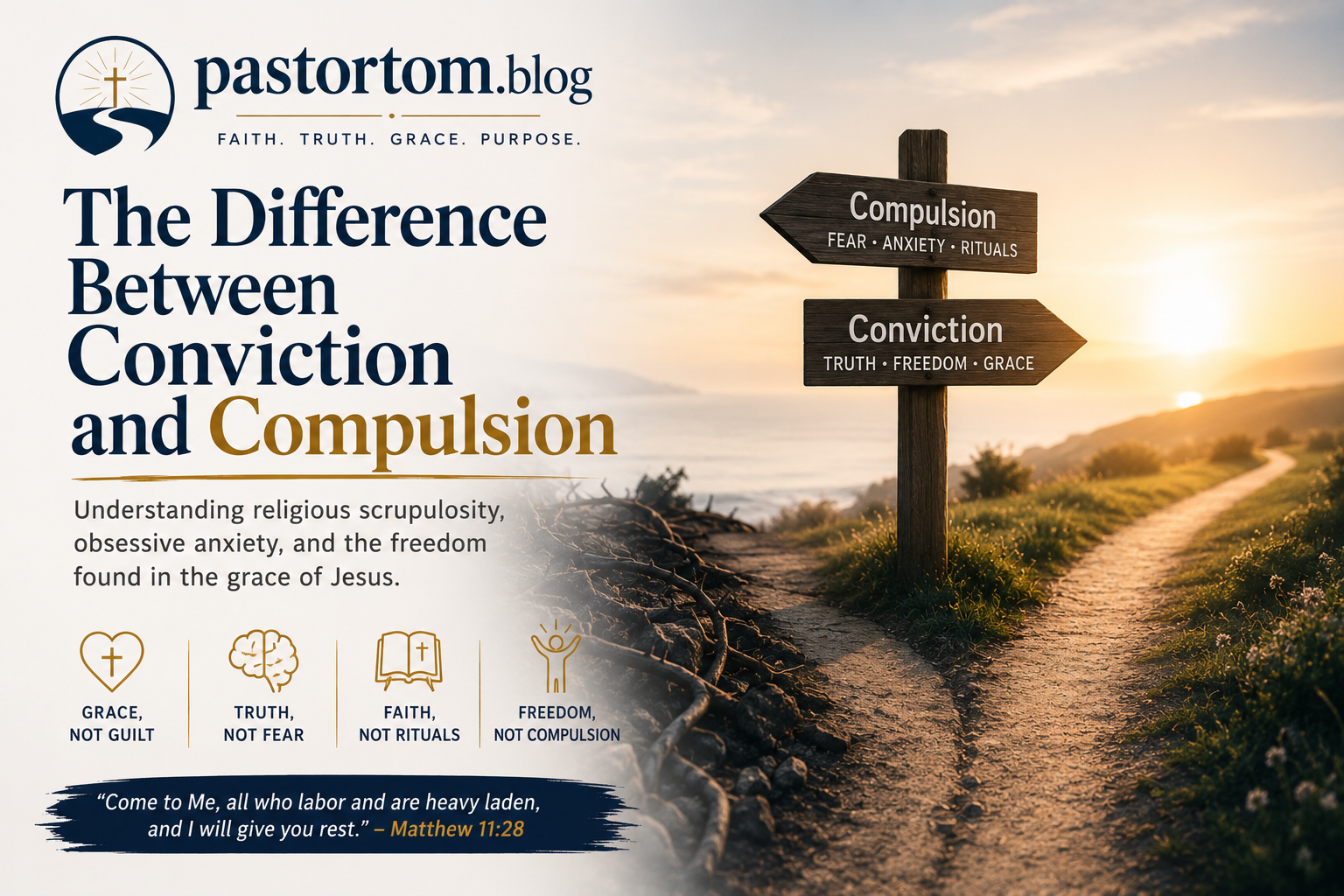
What happens when churches mistake compulsive fear for spiritual conviction?
In this edition of Pastoral Excellence, I explore the difference between conviction and compulsion, religious scrupulosity and OCD, and the pastoral responsibility of caring wisely for tender consciences trapped in fear loops and endless reassurance-seeking.
QuestionForGroup: How can pastors, churches, and spiritual leaders distinguish between healthy spiritual conviction that leads people toward grace and compulsive fear that traps people in anxiety loops — and what practices have you found helpful in leading tender consciences toward rest rather than fear?
Drawing from Matthew 11–12, years of pastoral experience, and the growing awareness of faith-related anxiety disorders, this article reflects on:
the fear of the “unpardonable sin,”
intrusive guilt and compulsive confession,
anxiety-driven spirituality,
fear-based ministry cultures,
healthy pastoral responses,
and the invitation of Jesus into rest.
This is written especially for pastors, chaplains, ministry leaders, counselors, and spiritual caregivers — but it may also help anyone trying to distinguish between grace-filled conviction and exhausting spiritual compulsion.
Read here:
https://www.linkedin.com/pulse/difference-between-conviction-compulsion-tom-sims-qhryc
 Pastor Tom's Community
Leave a comment