A Biblical and Theological Perspective
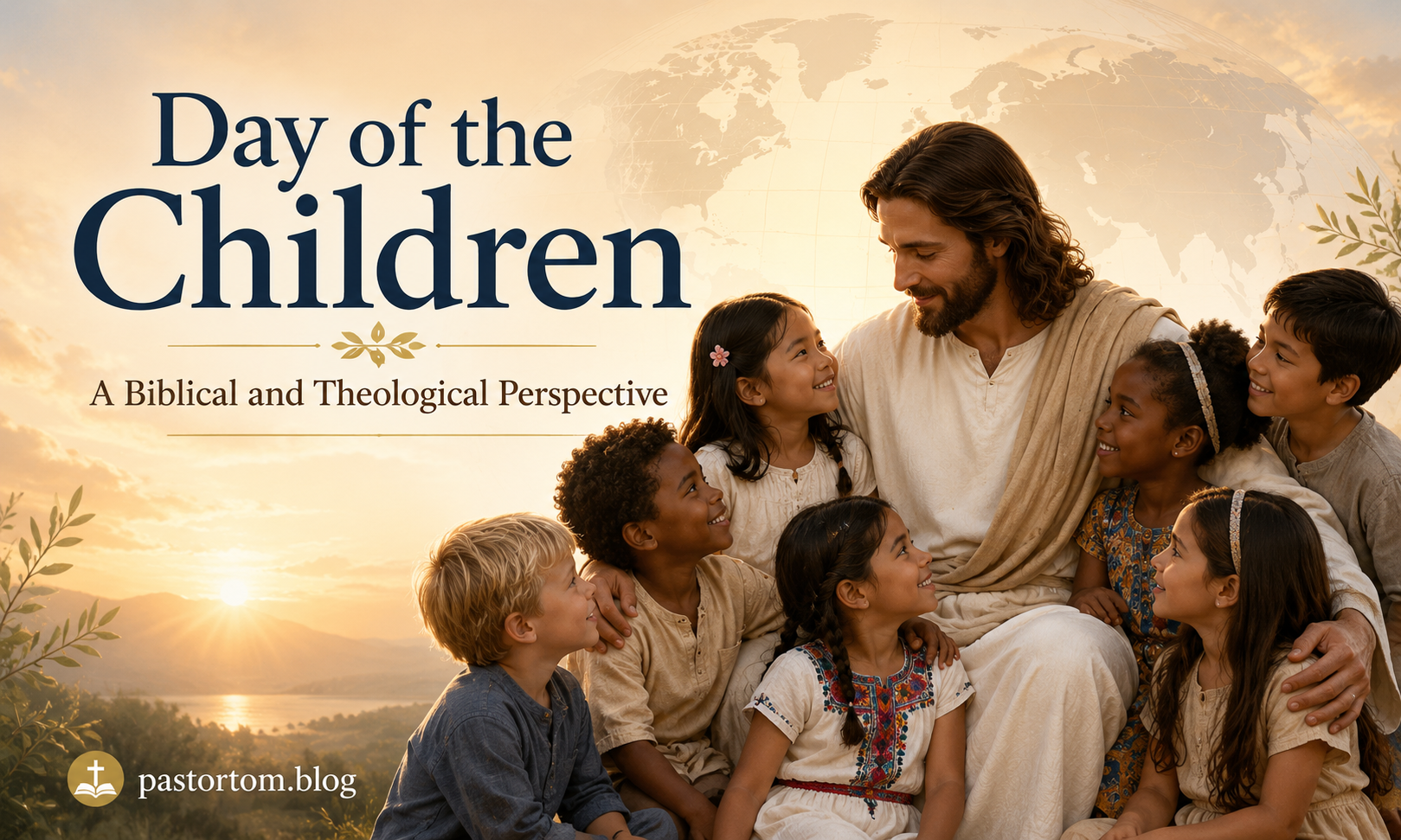
Today is observed in many places as International Children’s Day, a day that calls attention to the dignity, protection, rights, and flourishing of children. The date is complicated, as international observances often are. The United Nations’ World Children’s Day is officially observed on November 20, marking the adoption of the Declaration of the Rights of the Child in 1959 and the Convention on the Rights of the Child in 1989. UNICEF describes it as a global day of action “for children, by children,” calling the world to listen to children and honor their rights.
June 1, however, has long been observed in many countries as International Children’s Day, especially in nations shaped by Eastern Bloc and Non-Aligned Movement history. That origin does not make the concern less worthy. It simply reminds us that care for children is larger than any ideology, party, nation, or era. Children are not owned by the state, the market, the church, or even the ambitions of adults. They are gifts of God and bearers of divine image.
In Armenia, June 1 is observed especially with attention to the protection of children’s rights. In Mongolia, it is connected with Mothers and Children’s Day. And, rather appropriately, June 1 is also World Milk Day, a reminder that children’s flourishing is not merely sentimental. It is bodily. Children need food, nurture, protection, family, education, justice, play, song, and peace.
As I reflect on this day, I will be including the anthem “Prayer of the Children.” Kurt Bestor wrote the song out of grief over the civil war and ethnic cleansing in the former Yugoslavia, with particular concern for children caught in violence they did not create and could not control. The song has become a haunting musical witness to the suffering of children in war and displacement.
That is where theology must begin: with listening.
Children often wake up in a world shaped by choices they did not make.
They inherit our wars.
They breathe our polluted air.
They absorb our anger.
They live under our policies.
They are formed by our priorities.
They pay for our neglect.
They also receive our love, our courage, our faith, our repentance, and our better choices.
The biblical witness is not vague about children.
Jesus did not treat children as background noise.
When people brought children to Jesus, the disciples rebuked them. Perhaps they thought Jesus had more important things to do. Perhaps they were protecting his schedule, his dignity, or his religious seriousness.
Jesus did not appreciate their help.
Mark tells us that Jesus was indignant. He was not mildly annoyed. He was not gently inconvenienced. He was deeply displeased.
“Let the little children come to me, and do not hinder them, for the kingdom of God belongs to such as these.”
Then he took them in his arms, placed his hands on them, and blessed them.
That one scene says more than many volumes of theology.
Jesus welcomed children.
Jesus touched children.
Jesus blessed children.
Jesus defended children.
Jesus made children visible.
Jesus placed children at the center.
In another moment, Jesus took a child and placed that child in the middle of the disciples. That is important. He did not place the child at the edge of the room as an illustration. He placed the child in the center as a revelation.
The kingdom of God is not organized around adult ego, religious prestige, political power, or institutional survival. It is organized around humble welcome, vulnerable trust, and protective love.
Jesus said that whoever welcomes a child in his name welcomes him.
That means our theology of children is not a side issue. It is Christology. It is how we receive Jesus.
If we welcome children, we welcome Christ.
If we dismiss children, we dismiss Christ.
If we exploit children, we offend Christ.
If we protect children, we serve Christ.
If we listen to children, we may hear truths adults have learned to avoid.
Jesus also gave severe warnings about harming them. He said it would be better for someone to have a great millstone hung around the neck and be thrown into the sea than to cause one of these little ones to stumble.
That is not soft language.
It is holy warning.
The church must hear it.
Families must hear it.
Governments must hear it.
Schools must hear it.
Nations must hear it.
Movements must hear it.
Media systems must hear it.
Wars must hear it.
No cause is righteous enough to justify crushing children.
No ideology is pure enough to excuse neglecting them.
No religious performance is faithful enough to compensate for wounding them.
No economy is successful enough if children are hungry, afraid, trafficked, ignored, abused, displaced, or unheard.
The old children’s song says:
Jesus loves the little children,
all the children of the world.
The song’s language reflects its time, but its central claim remains profoundly Christian: children of every color, nation, language, and circumstance are precious in the sight of Jesus.
Not useful.
Not future consumers.
Not future voters.
Not future workers.
Not interruptions.
Not demographic problems.
Not political props.
Not sentimental symbols.
Precious.
That is the word.
Precious in his sight.
The prophets also understood this. Malachi spoke of a coming day when hearts would be turned:
“the heart of the fathers to the children, and the heart of the children to their fathers.”
That is more than private family reconciliation. It is a sign of spiritual renewal. When hearts turn toward children, spring is near. When adults turn away from children, something cursed begins to settle over the land.
Every generation receives children as a trust.
They come to us vulnerable, curious, playful, needy, observant, wounded, hopeful, and full of possibility. They ask questions we have stopped asking. They notice what we have learned to ignore. They sing when we have grown cynical. They grieve when we have grown numb. They pray when we have grown too sophisticated to kneel.
And sometimes, as in “Prayer of the Children,” their prayer rises from places of terror, silence, and loss.
Can we hear it?
Can we hear the prayer of children in war zones?
Can we hear the prayer of children in hospitals?
Can we hear the prayer of children at borders?
Can we hear the prayer of children in unsafe homes?
Can we hear the prayer of children in classrooms where they are afraid?
Can we hear the prayer of children whose parents are overwhelmed?
Can we hear the prayer of children who are lonely, hungry, unseen, or unwanted?
And can we hear the prayer of children who are laughing?
Because protecting children is not only about rescuing them from suffering. It is also about preserving their joy.
A child’s laughter is a theological event.
It tells us that creation is still speaking.
It tells us that grace is still possible.
It tells us that God has not abandoned the world.
It tells us that the kingdom still belongs to such as these.
So today, let us not merely celebrate children.
Let us receive them.
Let us listen to them.
Let us protect them.
Let us repent where we have failed them.
Let us build communities where children are not obstacles to adult plans, but signs of God’s kingdom among us.
Let us pray for parents, teachers, caregivers, foster families, social workers, pediatricians, children’s workers, counselors, advocates, and all who sanctify themselves for the sake of the young.
Let us ask whether our churches welcome children or merely tolerate them.
Let us ask whether our public policies protect children or use them.
Let us ask whether our homes bless children or burden them.
Let us ask whether our words heal children or wound them.
Let us ask whether our faith makes room for their questions, their wiggles, their songs, their tears, and their wonder.
Jesus said, “Let them come.”
That is still his word.
Let them come to safety.
Let them come to food.
Let them come to learning.
Let them come to worship.
Let them come to play.
Let them come to healing.
Let them come to Jesus.
Let them come without hindrance.
For of such is the kingdom of God.
Possible Closing Prayer
Lord Jesus,
you welcomed the children when others tried to turn them away.
You placed them in the center and showed us the heart of your kingdom.
Turn our hearts toward the children.
Turn the hearts of parents toward children.
Turn the hearts of leaders toward children.
Turn the hearts of churches toward children.
Turn the hearts of nations toward children.
Forgive us for the ways we have ignored, used, harmed, silenced, or failed them.
Teach us to listen.
Teach us to protect.
Teach us to bless.
Teach us to make room.
May every child know safety, nurture, dignity, joy, and love.
May every child hear, in word and deed, that they are precious in your sight.
Amen.

 Pastor Tom's Community
Leave a comment