Clay and Rock
Jeremiah 18:1-11 and Isaiah 51:1-3
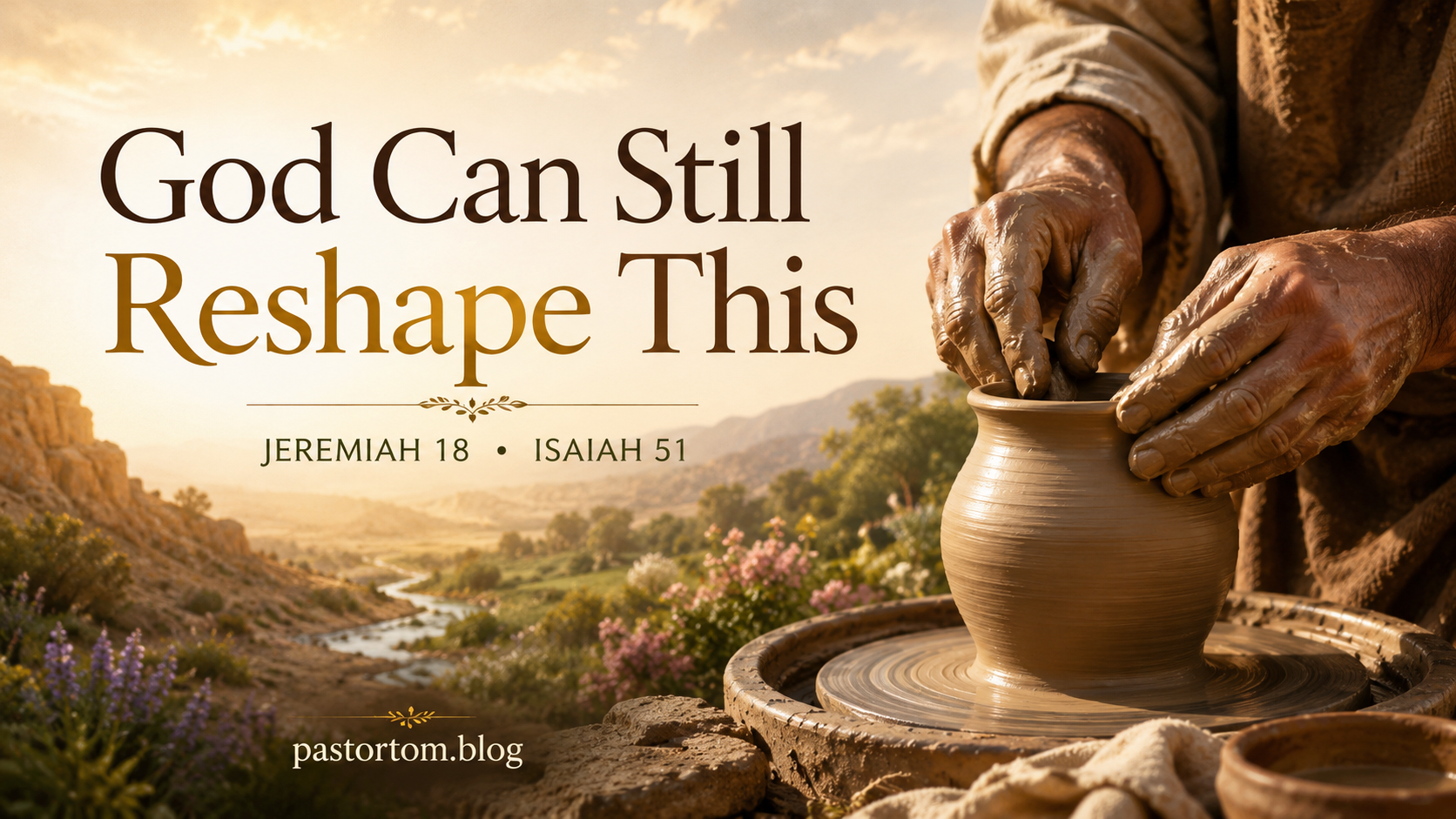
In Jeremiah 18, the prophet is sent down to the potter’s house. There, he watches a vessel being shaped on the wheel. The clay is spoiled in the potter’s hand, but it is not discarded. It is reworked. It is reshaped. It becomes another vessel, as seems good to the potter.
Then God speaks.
“Can I not do with you, O house of Israel, just as this potter has done?”
The message is both warning and hope. God is not locked into disaster. God is not trapped by judgment. God is not bound to a single outcome if the people turn, repent, and amend their ways. The clay can be reshaped. The future can be reshaped. Judgment itself can be reshaped by mercy.
But another reading comes alongside it.
In Isaiah 51, the image changes. This time, God does not speak of clay but of rock.
“Look to the rock from which you were hewn, and to the quarry from which you were dug.”
This word is addressed to those who pursue righteousness and seek the Lord. They are not being called first to the potter’s wheel, but to memory. They are invited to look back to Abraham and Sarah, to remember their origins, to remember how God called one man and made him many, how God blessed small beginnings and turned them into covenant promise.
Jeremiah says, “Let God reshape you.”
Isaiah says, “Remember where God brought you from.”
Together, they speak a word for people living under threat, uncertainty, disappointment, or judgment.
God can take rough clay and make a vessel.
God can take one lonely pilgrim and make a people.
God can take a wilderness and make it like Eden.
God can take waste places and fill them with comfort.
God can take a desert and make it into the garden of the Lord.
The call is not passive. Abraham responded in faith. Judah is called to turn and amend its ways. Those who seek righteousness are told to listen, look, and remember. God shapes, but we yield. God calls, but we answer. God comforts, but we receive. God restores, but we return.
So even when we live in a time of judgment, or under the threat of disaster, or in the shadow of consequences, we are not without hope.
The potter still has the clay in His hands.
The quarry still bears witness to where we came from.
The wilderness is not beyond God’s reach.
The desert is not beyond God’s garden.
Joy and gladness can still be found there.
Thanksgiving and the voice of song can still rise again.
God has both the capacity and the will to reshape things for His glory and for our good.
For Your Small Group Studies
When you hear the phrase “God can still reshape this,” what situation, relationship, habit, fear, or hope comes to mind?
Jeremiah 18 — The Potter and the Clay
- What stands out to you in the image of God sending Jeremiah to the potter’s house?
- The vessel was “spoiled in the potter’s hand,” but it was not thrown away. What does that suggest about God’s patience, judgment, and mercy?
- What is the difference between being broken beyond use and being ready to be reshaped?
- Where do you see resistance in yourself to being reshaped by God?
- Jeremiah’s word includes a call to turn, repent, and amend one’s ways. What does real repentance look like beyond feeling sorry?
- How does this passage challenge the idea that the future is fixed and nothing can change?
Isaiah 51 — The Rock and the Quarry
- Isaiah says, “Look to the rock from which you were hewn.” What spiritual roots, people, stories, or experiences have shaped your faith?
- Why might God tell discouraged people to remember Abraham and Sarah?
- Abraham was “but one” when God called him, yet God made him many. How does that encourage you when you feel small, outnumbered, or insignificant?
- What is the difference between nostalgia and holy remembrance?
- Isaiah promises that God can make the wilderness like Eden. What “waste place” in your life, church, family, or community needs God’s comfort and renewal?
Bringing the Two Texts Together
- Jeremiah gives us clay; Isaiah gives us rock. What do these two images teach together?
- How can God both reshape us and remind us where we came from?
- Which image speaks to you more right now: being reshaped like clay or remembering the rock from which you were hewn? Why?
- What does it mean to cooperate with God’s reshaping work without trying to control the outcome?
- Where might God be turning judgment into mercy, wilderness into garden, or small beginnings into blessing?
Application
- What is one area where you need to become softer clay in God’s hands?
- What is one foundation or origin story you need to remember this week?
- What practical step would show that you are willing to “amend your ways and your doings”?
- How can this group pray with you as you trust God to reshape something in your life?
Closing Prayer Prompt
Invite each person to complete one sentence silently or aloud:
“Lord, reshape…”
Then close with prayer:
“Lord, You are the Potter. We are the clay. You are also the God who calls small beginnings into great blessing and turns wilderness into Eden. Make us willing, responsive, and hopeful. Reshape what needs reshaping. Restore what has become waste. Bring joy, gladness, thanksgiving, and the voice of song. Amen.”
 Pastor Tom's Community
Leave a comment