James 5, the Battle Hymn, and Patient Justice.
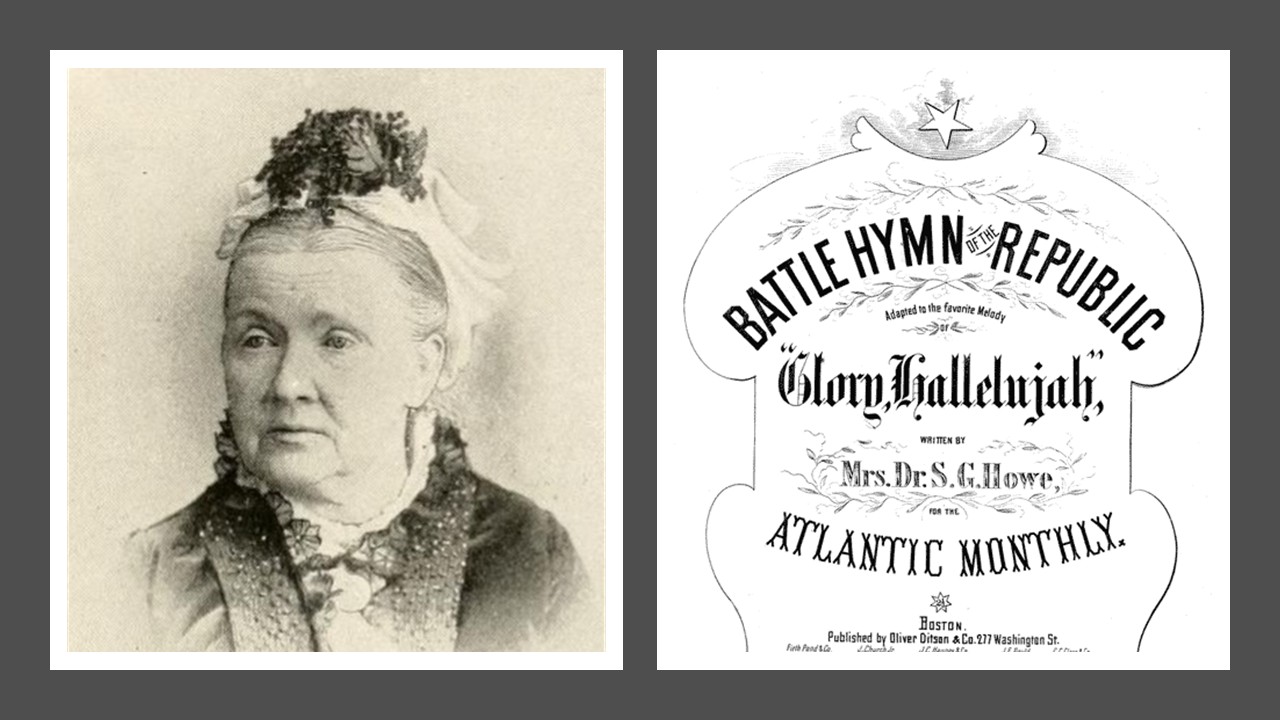
His Truth Is Marching On
James 5:1–10
It was a hymn. It was a protest song. It was a song of march for Union soldiers who traversed the trails of war into the South.
Before it became “The Battle Hymn of the Republic,” the tune had carried other words. It was sung as “John Brown’s Body,” a rallying cry that remembered the abolitionist whose body lay “a-moldering in the grave,” while, as the song insisted, “his soul goes marching on.”
Then Julia Ward Howe heard that marching song and gave it new words:
“Mine eyes have seen the glory of the coming of the Lord; He is trampling out the vintage where the grapes of wrath are stored; He hath loosed the fateful lightning of his terrible swift sword; His truth is marching on.”
There is judgment in that song. There is prophecy in it. There is longing in it.
There is a sense that history is moving toward a reckoning.
And later, Howe would also become associated with another kind of proclamation — a call for mothers to rise up for peace, a protest against the carnage of war, a plea that the children of one nation not be trained to destroy the children of another.
So the song, the tune, the history, and the longing all swirl together: abolition, war, justice, peace, judgment, glory, and the coming reign of God.
That became the earworm accompanying my reading today from James 5:1–10.
James writes:
“Be patient, therefore, beloved, until the coming of the Lord.”
And immediately I hear the hymn:
“Mine eyes have seen the glory of the coming of the Lord.”
James says, “Be patient.”
The hymn says, “His truth is marching on.”
And we look around and wonder: Is it? Is truth marching on? Is justice advancing? Is the kingdom coming? Are things becoming what they ought to be?
We do not yet see the full realization of the kingdom. We do not yet see the world as God intends it to be. We see injustice. We see exploitation. We see people with too much taking from people with too little. We see laborers defrauded, voices silenced, wounds ignored, and arrogance enthroned.
James sees it too.
Earlier in the chapter, he speaks bluntly to the rich who have hoarded wealth, withheld wages, and lived in luxury while others suffered. He does not soft-pedal injustice. He does not spiritualize it away. He says the cries of the workers have reached the ears of the Lord of hosts.
That is Battle Hymn territory.
That is prophetic territory.
That is “grapes of wrath” territory.
But then James turns to the beloved — to the people who are suffering, waiting, wondering, and perhaps tempted to despair — and says:
“Be patient, therefore, beloved, until the coming of the Lord.”
Patience is not passivity. Patience is not indifference. Patience is not denial.
Patience is faithful endurance in the confidence that God has not abandoned history.
James gives us the picture of a farmer waiting for the precious crop from the earth, being patient until it receives the early and the late rains.
The farmer cannot force the harvest. The farmer cannot command the clouds. The farmer cannot hurry the mystery of growth.
But the farmer can prepare the field. The farmer can tend the soil. The farmer can keep watch. The farmer can trust the process.
So James says:
“You also must be patient. Strengthen your hearts, for the coming of the Lord is near.”
That was written nearly two thousand years ago.
So what does “near” mean?
It means the day of the Lord is always close enough to shape how we live today. It may come in cosmic fullness beyond our imagining. It may come for us personally within the span of our brief lives. It may break into history in moments of awakening, conviction, repentance, and justice.
It is near enough that we cannot live carelessly. It is near enough that we cannot grumble endlessly. It is near enough that we cannot treat each other cruelly while singing about judgment for someone else.
James gets very practical:
“Beloved, do not grumble against one another, so that you may not be judged.”
In other words, behave yourselves while you wait for justice.
If you are longing for the Judge to come, remember that the Judge is not only examining your enemies. The Judge is standing at the doors.
So strengthen your hearts. Stop grumbling. Practice patience. Tell the truth. Do justice. Refuse despair.
Keep marching, but do not confuse your anger with God’s righteousness.
And if we need examples, James says to look to the prophets who spoke in the name of the Lord. They told the truth when truth was costly. They waited when waiting was painful. They suffered without surrendering the word God had placed in their mouths.
Their truth was marching on because God’s truth was marching on.
And we have an even greater example in Christ.
Was his victory won by vengeance? Was his kingdom established by cruelty? Was his sword made of steel?
No.
The sword of Christ is the word of truth. The power of Christ is suffering love. The glory of Christ is revealed in self-giving mercy.
The justice of Christ does not excuse evil, but neither does it imitate evil.
So we wait. We work. We witness. We strengthen our hearts.
The day of the Lord is near.
His truth is marching on.
Amen.
 Pastor Tom's Community
Leave a comment